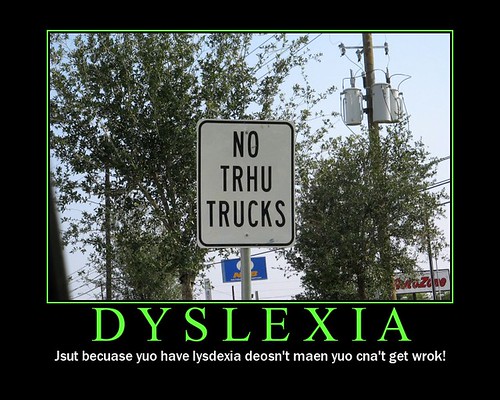
Tuesday, April 6, 2010

Hiatus

Teh Dyslexic Storytellers Blog is on break because of my work with the Art of Storytelling Podcast, the International Storytelling School, Eco Storytelling Retreat and LA Conference with the National Storytelling Festival.  Be back in a few months - please feel free to read by topic in the sidebar in the meantime.

Eric Wolf
PS: A red head on a beach....

Tuesday, March 30, 2010

Learn to Lie like a Pro with the Host of the Art of Storytelling Show.

Eric Wolf, the host of the Art of Storytelling with Brother Wolf Show, is available to be interviewed on or before April 1st, 2010 on how to lie successfully for April Fools' Day.  In 2009 he was interviewed on Fox 45 local News in Dayton, Ohio.  Eric Wolf was a Master of Ceremonies’ at the Smithsonian in Washington D.C 2009 Folk Life Festival.

In his interview he will discuss the advantages of lying and how liars have solid, political, social and psychological reasons for doing so.  He will defend an America tradition that dates back to the founding of America back to Mark Twain, why, even back to the Pilgrims.  He will also demonstrate the art of tall tales and flat lies for the viewing audience.

A successful tale tall or lie uses five storytelling techniques.
1) The lie needs a basis in truth.
2) The story needs to have a spectacular departure from reality.
3) The teller must have a personal body language that supports the lie.
4) The story should contain at least one small, reasonable detail that rings true to the listener.
5) The teller must have a willingness to defend the lie as truth. 

The Art of Storytelling with Brother Wolf Show
The Art of Storytelling Show has had over 127, 000 downloads since it began podcasting in 2007.  Created by Brother Wolf (Eric Wolf) in the spring of 2007, the show brings the best and brightest of the storytelling community to the world stage.  43% of listeners are from outside the United States from over 100 different countries.

The Art of Storytelling Show is the world’s sole interview- format show dedicated to exploring the art and science of storytelling in all its forms. With over a hundred interviews available for listening to online at http://www.artofstorytellingshow.com, this podcast has become the premier resource for understanding and practicing the art of storytelling worldwide.

For more information:
Eric James Wolf
Host of the Art of Storytelling with Brother Wolf Show
(937) 767-8696

Thursday, February 18, 2010

The Biggest Step

The writer is the host and producer of the Art of Storytelling Show

The biggest step towards towards success that any dyslexic person, or parent attempting to support a dyslexic student can make is realizing that they don't need to make their focus in life around what sucks.  Life is short and reading and writing are important.   Alright in a literate society reading and writing are really important.  But it is also important to spend time building other life skills, like having a moral compass, playing games, making friends and holding a job.  All skills that can be accomplished by anyone whether or not they can read.

I am not saying that you or your child have to give up your education.  But what if you took a year or two off to try other opportunities?  Taking your kid out of school and locking them up at home while you go to work might not be a good option unless you don't have to work or you have a hundred acre ranch to hang out in.  Working parents can recognize the value in sending your kid to summer camp setting for one month out of the year.

Perhaps your desperate reader loves baseball or tennis?  Whatever the area of their life that allows them to decompress and energize after a long day of not reading in a school setting.  Do not tie their dreams or fun to their school grades or ability to read in any way shape or form.  


Find their success however small and feed them.  Find their dreams and light them on fire.  

In the end building up what has been torn down in our children is a parents job.  In the end we must live with the choices and the personalities are children own.

Monday, February 8, 2010

Why if your dyslexic spying may not be the best career path.

Wired magazine wrote an article on the spy who could not spell.  Makes for an interesting read on the importance of realizing ones limitations.

http://www.wired.com/magazine/2010/01/ff_hideandseek/

Friday, January 29, 2010

#3 - Break the classwork down into pieces so it won't be too complex for the students to understand.

When knowledge is broken down into little pieces, the information is taken out of context.  This makes the learning process more difficult for the students.  This is not only because the students struggle to comprehend the new information, but they also grapple to relate the material to a familiar context.  Without a sense of place the student has no anchor to relate what they are learning in class to the world outside.  In a very short period of time the student will begin to lose interest in the class work

Brain research has suggested that human beings learn by two basic methods, route learning and map learning.   Route learning is short-term memory and map learning is more permanent long-term learning.  A good example of route learning is when a tourist memorizes instructions to find a house in an unfamiliar neighborhood.  These instructions are only good for one particular task, and the instructions assume that the tourist won't get lost or forget them on the way.  


If that tourist stays in town for a couple days, she might find herself identifying some frequented locations.  This tourist has begun to build her contextual map of the city in which she is visiting.  This map is a part of her long-term memory.   If she decides to stay for a couple of weeks in the same city, exploring it more thoroughly, she might find that her personal map of the city is getting good enough so she does not need to relay on the routes she had memorized for getting around

Teacher guidance is important in the early stages of every student's development, but the teacher has to respect the student’s development of an independent process.  The teacher could allow space for individual interpretations of the information being studied.   

When we learn, we build our map to a level where we can function effectively independently of other sources.   Students develop competence when they are allowed to become independent of teacher guidance and when they are allowed to develop their own maps.  Having the teacher support this process of gaining independence is very important to students.  Sometimes students need someone to hold their hands and sometimes they don't.  A good teacher knows the difference.  

This is post 3 of 12 posts on How to turn a Teacher into a Prison Guard.

Friday, January 15, 2010

Art, Storytelling and Dyslexia

The writer is Eric Wolf Storyteller

Art is not limited by state budgets, the few hours of life apportioned or others acceptance.  The only limitation of art is our desire to embrace art as we know it and to love that expression that calls us into our passion - into our being - into the voice of God.  Of all the arts, storytelling is the most able to thrive despite budgets cuts, institutional ignorance and community apathy.  Storytelling brings people together and serves as a beacon for community healing.

To be an artists is to give yourself over to a creative process that promise no fruit with each effort.  But instead enlightens our lives with a gift that can only be declared - soul.  Art in it's purist form is God's hand in our mortal lives.  A living testament that their is more to our lives then this simple physical frame.  To be an artist is to see the world, not only as it is - but as it can be or will be by our will.

Art makes meaning where there is none, gives power to the powerless, heals wounds long scarred, and above all hold love triumphant for the entire world to see.  Successful art brings people together through compassion, forgiveness and understanding.  Art and storytelling is held and holds community in it's sacred trust.  Art binds the sinews of the mortal world into a tapestry that ancestors hold in their immortal coil.

When we examine what it means to be dyslexic in a modern society we find ourselves looking at an entire class of creative types who are artists by definition.  Though their creative efforts may be far from what society defines as “art”.  They as a group fall in the range of artist by their very necessity of invention. Their inability to fit with the bounds of normality causes them to rush into the worlds of creativity that others will never experience.  Not to say that to be dyslexic is to be born a painter, actor, poet or artist.  Far from that.   Dyslexics make the best storytellers by the requirements of the world bent down upon them.

Storytelling is the refuge of sinners and survivors.  Storytelling is an art long associated with lying and dishonesty.  Oral Narrative is held in disrepute for the same reasons it is so widely successful.  The ease at which storytelling can be adapted and used to support the powerless and the oppressed is the same ease that allows sinners and con artists to bends it to their will.


Saturday, January 9, 2010

Review of Learning Outside the Lines


Jonathan Mooney and David Cole have written the student support book I wished I read when I started high school and college and was classified as having a learning disability


This booked is packed full of tricks and twists to get the troubled student to survive the system and all it’s annoying realities.  From how to replace lost notes to how to take notes this book is an A to Z survival guide written by two students who had bee there and done that.  Each author brings a unique perspective to the table with Mr. Mooney talking about Dyslexia and Mr. Cole speaking about ADHD.


As the authors point out students who are categorized with a learning disability are perfectly positioned to take advantage of the college system and get a full college education with out having to sit through another lecture or test.  Many students are unaware of how flexible a liberal arts education can be and in this book we see all the levers and insider tricks laid bare.


Not being interested in attending any more schooling with my MS in Education I was not as interested in backbends and other nifty moves covered in the 2nd half of the book.  I as a dyslexic survivor of out modern schools system I appreciate the skill set that the authors offer – the one weakness of the book is that the authors don’t spend enough time explaining a students rights and legal recourse under the American with Disabilities Act.


Many students in technical schools and state colleges may find that some of these tricks described in the book are not available to them with out the liberal education focus… but even these students would benefit from a reading of “Learning Outside the Lines” 


The most moving section of the book for me by far was Jonathan Mooney’s autobiography chapter.   I hope that he has published this elsewhere because the story of his early educational experience should be widely distributed.  I cried like a little baby when I read his description of hiding in the bathroom to avoid reading a loud to the class and how he took days off to avoid tests.  Memories I am sure I have buried and long forgotten.  I howled with anger to hear his description of his teachers’ hard line attitude that all the children needed to have the same standards.


These things happened to Jonathan and David in the 80’s when the American with Disabilities Act was in full force.  I went through grade school on the liberal west side of Manhattan with enlightened people who did the same behaviors ten years before.  This book makes me wonder how many teachers continue to belief that all children need to learn the same way.  Growing up in NYC I was not turned off by the language, but I have read that some people are.   My experience working with troubled teenagers is that they know all that language intimately and the idea that they need to be protected form it is insulting to them.


Thank-you Mr. Cole and Mr. Mooney for writing this book.  Required reading for any college bound student who suspects he or she may qualify as a learning disabled student.

Saturday, January 2, 2010

10 Best Dyslexia Resources Online in 2010.


This list is up for revision - so if you have better resources to offer let me know.  If on the other hand you want me to sell something for you - please give me money or don't bother me.  I personally find much of what is written about dyslexia is either disingenuous or downright ignorant.  The writing is not meant to empower the students, teacher or parents - merely to placate parents and help maintain an uneasy unholy alliance between schools and government in which a lot of people are gainfully employed and a lot of children willfully ignored.

I started out this list as a simple to do and find myself, here days later, a little pissed off at the state of blogosphere today.  Are we as dyslexics so castrated as to have no voice?  Are we with these few exceptions just lying down and taking it?  What the hell?  I am lucky to have reached these ten - I started out looking for blogs but I had to settle with resources because I couldn't find ten blogs that met my standards for inclusion.

1) Jonathan Mooney's Website

Normally I wouldn't even consider a small site like this for the list, let alone for recommending as resource for parents, let alone top of the list, but the man is a genius.  His book made me cry and I love him for that.  The review will be coming our next week so come back and check it out if you get the chance.  The to go resource for living with dyslexia in the system.

2) The Davis Method

Look I don't know if it works.  I don't care if it works - what I care about it is that they are trying something and they are by many accounts succeeding - without drugs or expensive therapies - maybe soon I will have a long  conversation with a practitioner of the Davis method.  They don't feel like some other slick outfits that charge thousands of dollars for snake oil, but some nice people trying there best with a difficult deal.  In recognition for their efforts I place them in 2nd.  

3) The Dyslexic Storytellers Blog 

Well clearly this blog is the best on the subject. LOL

I still dream of having other dyslexic people join me in writing posts of their experience in modern educational settings or in succeeding with overcoming there dyslexia.  I invite you to help me spread the word.  Here are the rules to submitting a post
a) No corrections by anyone else.
b) No selling or self-promotion of books, etc..
c) All real experience of dyslexic people is welcome here


Like many blog actually written by a dyslexic person this blog does not post that often.  But the writer is really striking at the underpinnings of the intellectual crusade that terrorizes dyslexic people all over the englishdom.   I found his posts witty and a cleaver counter point to the old and some what out dated thought patterns else where in the blogosphere.  A bright light in another wise dark room.

5) Eide Neurolearning Blog

Examining the brain and it's relationship dyslexia and other LDS issues.  I enjoy every time I have found myself reading it.

6) Myomancy ADHD, Dyslexia and Autism

Examining the world of LDS this blog does not publish enough.

7) The Dyslexia in Victoria Blog

This blog is a fresh if traditional perspective on dyslexia and learning in Canada.

8) Travel and Photography from the Dyslexic Point of View

I enjoy reading this blog - always surprising and inventive.  Not always on topic but follows the rule that we love here - spelling after content - let not the lack of ability to spell stop us from delivering the message.

9) The Dyslexic Blog 

Pretty mainstream in its perspective.  But has some fresher thoughts and perspectives of all the different parent resources on dyslexia perspective online.

10) Your suggestion...

There are fifteen wonderful website that are conspicually absent from this list.  They are absent because they represent an orthodox perspective that is based on old world beliefs.   Before you recommend one of them ask yourself;  Does this website validate the idea of school over education?  
Does this website empower dyslexic children?  
Does this website recognize the ability of children to co-create?  
Finally does this website have an inherit self interest in children or dyslexia being a problem that should fixed or solved?  

Saturday, December 26, 2009

#2 - Set the regulations for the classroom and be sure that the students follow them.

This is post 2 of series on How not to Teach.


In many modern classrooms it is very easy to forget why the class has come together.  The students are there to learn and the teacher is there to help them learn.  When the teacher becomes obsessed with the process of keeping order in the classroom, the students soon forget why they are in school at all.  The classroom becomes a prison.  In a classroom in which development of independent students is paramount, power is infinite because the emphasis is on empowerment of the student to learn.  It is true that order must be kept in the classroom, but not at the sacrifice of student confidence and faith in themselves..  Empowerment is taught through example,  opportunity and practice.

It is the job of teachers to set up an environment where the students feel a part of a community of learners.  Empowerment, group process and a sense of community must be learned and earned over a period of time by the entire class, including the teacher.  Teachers who see themselves embarking on a venture, in which cooperation is the key, will find that they are participating in a growing, changing, classroom community.  The key word here is community, in a community every one participates in the process of day to day living.  No amount of legislation, dictation or regulation will create a community of learners.  Only a good example and a humble teacher can do that.

This idea of sacrificing individual liberty and learning for the order of the classroom, and by extension the society, comes out of the middle ages when an education was received in monastery from monks.  The monks were into practicing austerity, sacrifice and simplicity.  They also recognized that religions tend to fragment with out a heavy dose of guilt and pain to keep everyone in the same line.  They organized there class rooms like churches with pews and pulpit.  These are all concepts that we don’t really need in the 21st century, but these puritan values remain present still in most classrooms.


This is #2 of 12 Ways to Turn a Teacher into a Prison Guard.

Sunday, December 20, 2009

#1 - Demonstrate your expertise in the classroom from day one and do not allow students to challenge you.

Teachers who are just beginning in the field most commonly follow this rule.  Whenever the students become emotionally involved in what is going on in the classroom, the teacher will step in to calm things down and prevent the class from escaping the teaches control and getting out of hand.  In this way, the teacher stops the learning process, taking control every time the class attempts to go beyond the guidance of the teacher.  No private space or independent development is allowed inside the expert’s schedule and classroom.


No learning is allowed to take place because any true knowledge gained would challenge the teacher’s ability to speak with authority.  The teacher speaks down to the student and is uninterested in what the student offers in the relationship between student and teacher.  The teacher, who is busy showing their expertise off to the students, may or may not notice an attempt by the class to be independent, let alone take the opportunity to facilitate it.  Power corrupts and absolute power corrupts absolutely.  It's important to see how being the all knowing teacher can be a very satisfying, if ineffective role, to play in the classroom.    

This is 1 of 12 ways to turn a teacher into a prison guard.

Saturday, December 12, 2009

Intro to 12 ways to turn a Teacher into a Prison Guard.


This series will attempt to examine the 12 basic traditional rules of teaching that block a student’s learning process.  Currently these rules could easily describe the interaction of many classrooms in the U.S. and abroad.  Luckily, many teachers intuitively knew that the twelve rules did not facilitate the learning process.  Growing numbers of people understand that teaching is a process of facilitating empowerment of the student's individual learning process.

The Factory Model remains today the ideal classroom of our culture, despite over a hundred years of reform and progressive attempts to change the system.  The American vision of what a teacher does, is a day filled with drills, spelling tests, read along, sitting in straight rows, and homework.  This system of dealing with kids has evolved from a medieval model into the factory model classroom of the 19th century, a model that was developed and implemented with the management tools and philosophies of that century.  System of education designed to teach Americans a common culture and political apathy.  The current apathy and political listlessness isn’t responsible for a failure of the educational system; the political apathy of the American population is a direct result of that education system


Students and parents need to recognize themselves as consumers of a system of education.   Once a student see they have choices in the school setting with the help of their parent, they begin to take the political power to improve their education.  The public school system is forced to recognize parents who expect their inherent power to change the basic philosophy behind education.  Parents and children can move beyond the consumer choice and create their our own models and ideals for what education means

A revolution in education needs to happen in the United States today.  It is change of philosophy, not method that will rescue American education.  The politics of education is currently defined by a struggle over who will control our schools.   The politics of education can be about cooperating to unleash our youth’s ability to learn and change the world.

Just another update.

Tomorrow I will begin publishing my opus from college on the How to Not Teach or 12 ways to turn a teacher into a prison guard.  This article was written by me during my last semester of college in 1993  I will be updating it for clarity.  These post are actually far more radicle then anything else I have published here before - I wrote this post while researching whole language reading theory and practice and other radicle teaching methods.


I wrote this piece while I was doing a direct for college credit teaching sessions.  That's when I met with a teacher for an hour a week, did additional independent work and got a full college credit for a class.  If I had only known about this when I started college I would have done all or most of my class work this way. 


On another note my process on this blog had changed -
1) am editing my work with a much lighter heart.
2) Wow  I am editing my writing at all. Amazing
3) I have become very comfortable with sharing non main stream ideas about education.
4) Those ideas have defiantly developed.


I hope you enjoy this series...

Friday, December 4, 2009

Feeling an impact


I have been writing the dyslexic storytellers blog for the past two years for mostly my own sense of self recognition and self respect - perhaps a little bit of pure need for release of frustrations relating to dyslexia.  During that time I have had a view calls  from people who are parents of dyslexic children and that has been exciting.   Mostly because I care so much and secondly the assumption that the average American starts off with about the meaning of the words dyslexia, learning disabilities and schooling boggle my mind.

Recently I received two calls that have forced me to stop and examine my goals for this blog.  One is an invitation to attend the Diamonds in the Rough conference in Washington D.C. to be interviewed on some of the topics I have written about here on the blog.   The 2nd call is from the editor of one of the most commonly used special ed text books in university settings who shall remain nameless for the moment.   She had some questions - The point is this blog is having a bigger impact then I realized and so I am going to think about how I can refocus and redouble my work for the immediate future - I want to move beyond questioning the approach to dyslexia in modern society - I want to find a new approach - I want to move away from issues of integration of dyslexic students and examine how dyslexic students can live in modern society as themselves.

What does it mean to be dyslexic and not be limited by it?
What does it mean to grow up never feeling stupid or side lined?
How have people who are dyslexic found happiness in this world?

In faith that there are answers...

Eric Wolf

Thursday, November 26, 2009

Now Back to Storytelling for children and adults...


Years ago I started my fairy tale line Fairytales Forever as Fairy tales for Single Parents.  These stories a rose out of my work with inner city children in New York City.  Many of whom are growing up in single parent household.  This seven CD set touches on issues of interest to modern children through recasting the fairytales of old.  I am planning on finishing this set next spring.  You can read more about the Fairy Tales forever series at http://www.fairytalesforever.com/

Sean Buvala is working the other end of this market brilliantly with his new e-book Daddy Teller.  Which you can read all about at http://daddyteller.com/.  What I really like about Sean's work - with out having read it  - is that he is empowering fathers everywhere to use storytelling role model there children.  How else could you get the most bang for your very limited time with your children?

You could take my free e-course on Zen and the Art of storytelling in Seven Simple Steps, but that would still leave gaping holes in your knowledge of how to use storytelling with children as a dad. (or a mom) The fact is that knowing how to perform and knowing how to be present with your children are vastly different skill sets.  

Wednesday, November 18, 2009

12 workshops I wish were at the International Dyslexia Association Conference this year...


Here are the 12 workshops that would serve the attendees - if they happened upon them at this weeks IDA conference.


  1. Statistical relationships in early age bedside home reading and dyslexic student reading later in life.
  2. How to guide to storytelling in the home.  Learning reading through desire.
  3. An interview with a dyslexic lawyer, doctor, teacher, fisherman and fireman.
  4. An open discussion with 3 parents who raised dyslexic children.
  5. The relationship between diet and the brain of your child.
  6. How to get students to care about reading when school has kicked the shit out of them.
  7. Un-schooling the school were no one has a label.
  8. My Waldorf schooled dyslexic child - the good, the bad and the lovely.
  9. An examination of self interest - money and the role it plays in school settings. 
  10. Chinese lessons on dyslexia; using the herbs of the east.
  11. When Dog let's you down.  Discussions on God and dyslexia.
  12. I feel...  How to listen to your teenage Dyslexic. 
I would love to find one of these workshops at the conference.
If you saw one this past week please let me know right a way.  ;-)

Wednesday, November 11, 2009

Wish I was at the International Dyslexia Association Conference this week... not really.

The International Dyslexia Association(IDA) is a 501(c)(3) non-profit, scientific, and educational organization dedicated to the study and treatment of the learning disability, dyslexia as well as related language-based learning differences.  Click the link to go to there website.

If your a long time reader you will see right away that my approach and the associations to dyslexia is in direct conflict.  Reading through the conference brochure I am struck by how many of the workshops are about getting dyslexic children to mainstream as quickly as possible.  These are children with a completely disconnected learning style form the the style of teaching that is used in modern schools.

Basically it's the word "treatment" that bothers me.  I am not sick - I do not need a doctor or therapist because of my dyslexia.  Though you may argue with me successfully that after attending public and private school as dyslexic person I may be in need of a therapist to rebuild my self confidence.  There is nothing wrong with me - I just think different then 80% of every one else.  I am not broken, but me and my kind have existed for a long time and will exist for years to come.

Maybe dyslexic children are the canaries in the coal mine- demonstrating to us and to our whole society that the modern model of schooling is broken and in need of reform.
For my next post I will propose 12 workshops I wish were at the International Dyslexia Association Confer

Monday, November 2, 2009

Dyslexia is more then not spelling.


Sometimes it is difficult for people to understand that dyslexia is more then just having difficulty with reading, grammar and spelling.  If only that were the case, dyslexia is a struggle with literate world that insists on treating everyone like they can fill out forms by hand.  For many people, dyslexia also effects their audio recognition and more importantly precognition of events.  In other words time is particularly difficult concept for many people who are dyslexic.

Both the movement of time and planning the use of time can be very difficult for dyslexic children and adults.  As a professional storyteller I have struggled for years with stage timing and how to be aware of the time on stage without breaking contact with the audience.

Another reality that many dyslexic children and adults face is shame and other emotional baggage related to their struggle to function in a literate society.  A society that does not seem to recognize best effort or tried really hard, but only recognizes spelled everything correctly.

Sunday, October 25, 2009

"Scary Stories are good for your children," says host of the Art of Storytelling Show.

Eric James Wolf, professional storyteller and host of the Art of Storytelling Show, is available for print, radio and television interviews to speak on how scary stories can be used to teach important life skills to children.

Scary stories and ghost stories have been used for thousand of years to gather interest in young people towards learning a new subject. Eric Wolf says “From ghost stories to strangers giving your child candy; scary stories have been used to help young people identify danger in the world.” Useful scary stories and ghost stories are based on truth, teach valuable skills and leave the audience feeling empowered against the villain or evil of the story.

Eric Wolf host and producer of the Art of Storytelling Show with over 100,000 downloads to date is the longest running, most successful show ever produced dedicated solely to perfecting the art of storytelling.

For more information: http://www.artofstorytellingshow.com/category/scary-storytelling/


The Definition of Success for Dyslexic students.

Recently I was asked to present at a conference on my success as a dyslexic person.  I don't feel particularly succesful.  I have the same amount of frineds as everybody I know, maybe less.  I am married and I am a sucesful step parent.  I have a business that is not really the runaway success I want it to be (yet).  But when I turn off my fairly well developed mind of the critic.  (and where did I develop this idea of the critic you may ask? - don't get me started.)

I find that I am very succesful.  I live in my dream house to my dream woman.  I have my dream job and I work really hard at it with some very specatcular results.  If not the spectacular fiscal success - I have developed some substainsial results - and I am looking forward to even more in the coming months.

In every measure of the word success - I can say that I am successful.  I set goals and I accomplish them - I have setbacks and move past them.  I am a functioanl dyslexic person.  Except that is not really the term I would use - I am really a functional whole person.  I am something that I was never taught in school.  Somehting that is not in the curiculm.  A sum of the whole l that is harder to find then then the numbers.

I am a human being.  Dyslexia is just a term to help the world understand and forgive my limitations of my humanity.

Saturday, October 17, 2009

No Computer Allowed....


I had to go to court to support a friend and I discovered a sign that blew me away - no computers or electronic devices allowed.  Can you believe it?  In defense of the need for privacy the court has gone to far I think.  How are people with out decent handwriting to function?  What if I had wanted to take notes?  Or if I had needed to demonstrate to the court some evidence of some sort or other that is on my computer.

I probably would have needed to bear the $$$ of printing - trust it to government to be the last refuge of the luddite.  All hands raised for the courts.  Truth, justice and paper only please.  From an evidence stand point I think the computer and electronic documentation too easily changed.  Not that paper is any more solid really.

The assumption is that all attendees can write and then read a sentence in notes.  But times are changing and many people keep notes on there laptop or even blueberry - expect of course in the Court system.