Showing posts with label Storytelling. Show all posts

Wednesday, January 8, 2025

A Feild Guide to Narrative Therapy


This Book Is For…

The Long Time Therapist who has hit a wall and is seeking to learn a new way of doing therapy.

The Student of Therapy who wants to learn the art of being therapist.

The Burned Out Practitioner who is feeling like they have to leave the field of therapy because their practice is personally unsustainable.

The Narrative Therapist who is wanting their practices to become clearer and commit more to exploring the path of what it means to practice narrative therapy.

Anyone Who is Dissatisfied with the modern mental health system in North America and is seeking another way forward.

Buy A Field Guide to Narrative Therapy

You can see these Reviews on Amazon Right Now.

Gerilyn Hubbe
5.0 out of 5 stars Click. CLick. cliCk. mmHmmm… **EXACTLY**
Reviewed in the United States on September 5, 2024
(The sound of existential breakthroughs in succession via Eric’s highly relatable vivid humorous heartfelt writing). I’ve been mesmerized by Narrative Therapy since I was first introduced 5 years ago. Over that time I’ve taken several graduate-level courses and filled a large shelf of books dedicated to the Narrative Practices. If I could only recommend one book, for the curious beginner or the experienced practitioner wanting to deepen and ground their work in the relatable grit of ordinary human stories, it would be this one.

Herbnerd
5.0 out of 5 stars Great Stuff
Reviewed in the United States on September 25, 2024
Verified Purchase
Really great and practical review of Narrative Therapy. In some ways this style can be considered iconoclastic, but the author brings abstract ideas to life while exploring practical applications.

The Rev
5.0 out of 5 stars At Last!
Reviewed in the United States on May 26, 2024
Verified Purchase
This is the rare offering the field of counsel has been missing! Eric Wolf brings a tender, real element of priceless humanity in the perspective of an authentic being having a fully unique narrative that needs to be heard. Rather than the clinical rabbit hole we are numb with, it provides insight to opening a bright new horizon of possibility if we can just take measure of a souls journey with this clearly defined outline of practices that are full of compassion and light. If you are a professional counselor enhance your vocation with this useful guidebook!

Friday, May 25, 2012

Art is Service

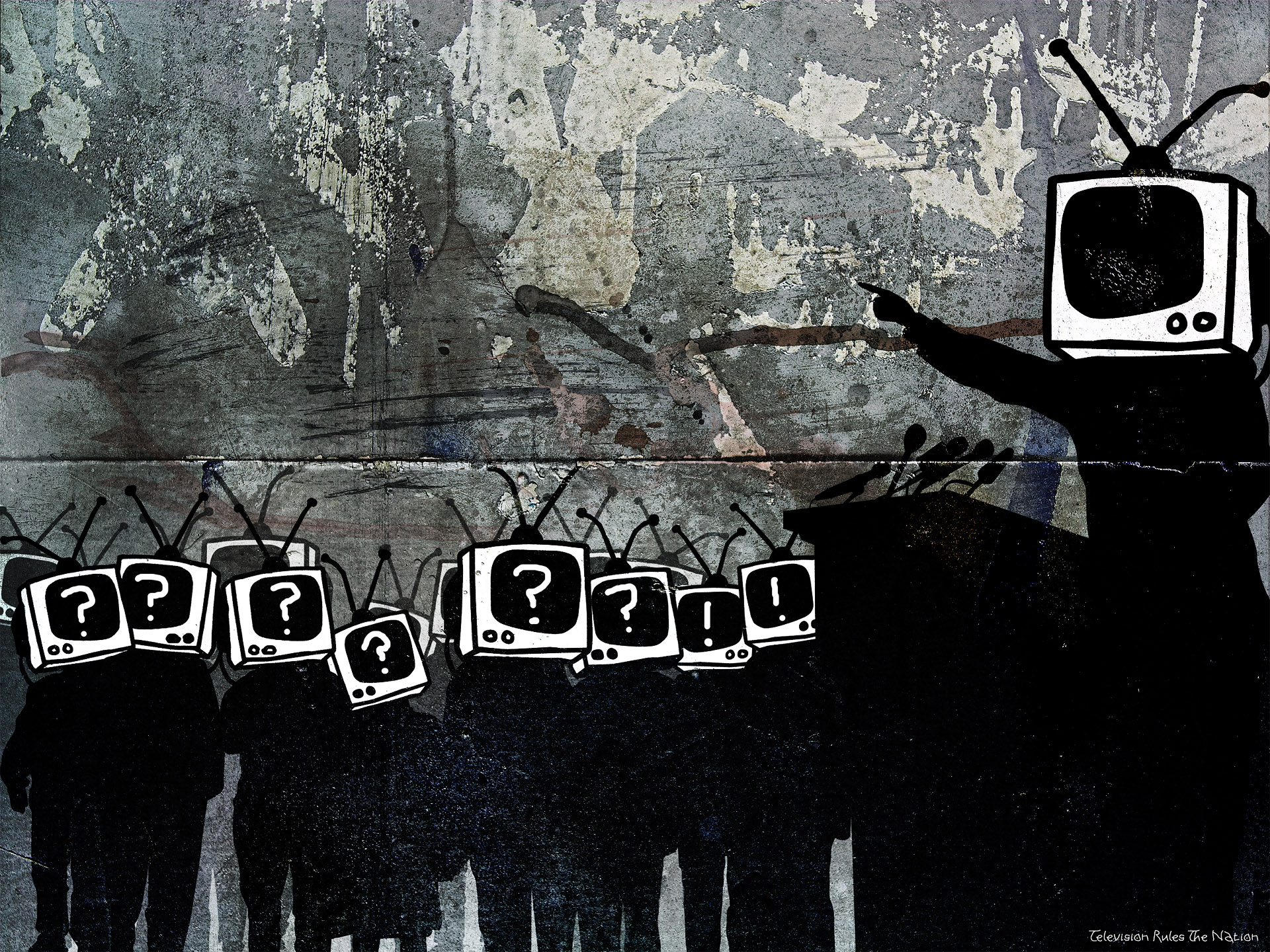
Life is not filled with television, radio and internet.  Life is filled with stories spread through television, radio and internet.  Where these medias get in trouble is where they forget that they are meant to be life affirming and life sustaining.   Successful art redeems life bringing joy and laughter to life and is essentially human culture reborn to serve that the current generation.

TV and radio are top down forms of media.  The owner of the media gets to decide what the media will broadcast.  The internet has bias too towards those who can purchase talent or ears.  But the internet has it's own potential to serve a different type of storytelling.  With the rise of the internet the middle class has an media engine to match the TV and radio. 

We are all storytellers - but many of us have forgotten that part of the responsibility of the storyteller is which story to tell.  We are used to being told by the TV what are stories we are part of.  Americans are not used to the telling part of storytelling.  We are learning.  Slowly the giant of the future awakes to find that his chains have become string his cage a ginger house.

There are so may people still who do not have access to the internet - this fabulous tool of free expression.  We are awakening from the age of the TV - we are a wakening into the age of the storyteller.  We begin with the most basic question - not what do we want to consume - but what do we want to create?

Tuesday, March 30, 2010

Learn to Lie like a Pro with the Host of the Art of Storytelling Show.

Eric Wolf, the host of the Art of Storytelling with Brother Wolf Show, is available to be interviewed on or before April 1st, 2010 on how to lie successfully for April Fools' Day.  In 2009 he was interviewed on Fox 45 local News in Dayton, Ohio.  Eric Wolf was a Master of Ceremonies’ at the Smithsonian in Washington D.C 2009 Folk Life Festival.

In his interview he will discuss the advantages of lying and how liars have solid, political, social and psychological reasons for doing so.  He will defend an America tradition that dates back to the founding of America back to Mark Twain, why, even back to the Pilgrims.  He will also demonstrate the art of tall tales and flat lies for the viewing audience.

A successful tale tall or lie uses five storytelling techniques.
1) The lie needs a basis in truth.
2) The story needs to have a spectacular departure from reality.
3) The teller must have a personal body language that supports the lie.
4) The story should contain at least one small, reasonable detail that rings true to the listener.
5) The teller must have a willingness to defend the lie as truth. 

The Art of Storytelling with Brother Wolf Show
The Art of Storytelling Show has had over 127, 000 downloads since it began podcasting in 2007.  Created by Brother Wolf (Eric Wolf) in the spring of 2007, the show brings the best and brightest of the storytelling community to the world stage.  43% of listeners are from outside the United States from over 100 different countries.

The Art of Storytelling Show is the world’s sole interview- format show dedicated to exploring the art and science of storytelling in all its forms. With over a hundred interviews available for listening to online at http://www.artofstorytellingshow.com, this podcast has become the premier resource for understanding and practicing the art of storytelling worldwide.

For more information:
Eric James Wolf
Host of the Art of Storytelling with Brother Wolf Show
(937) 767-8696

Thursday, November 26, 2009

Now Back to Storytelling for children and adults...


Years ago I started my fairy tale line Fairytales Forever as Fairy tales for Single Parents.  These stories a rose out of my work with inner city children in New York City.  Many of whom are growing up in single parent household.  This seven CD set touches on issues of interest to modern children through recasting the fairytales of old.  I am planning on finishing this set next spring.  You can read more about the Fairy Tales forever series at http://www.fairytalesforever.com/

Sean Buvala is working the other end of this market brilliantly with his new e-book Daddy Teller.  Which you can read all about at http://daddyteller.com/.  What I really like about Sean's work - with out having read it  - is that he is empowering fathers everywhere to use storytelling role model there children.  How else could you get the most bang for your very limited time with your children?

You could take my free e-course on Zen and the Art of storytelling in Seven Simple Steps, but that would still leave gaping holes in your knowledge of how to use storytelling with children as a dad. (or a mom) The fact is that knowing how to perform and knowing how to be present with your children are vastly different skill sets.  

Friday, July 17, 2009

The Gift of Story


While not writing for this Dyslexic Blog I have a career as a storyteller I am currently attending the Talk Story Conference in Waikiki Hawaii and yesterday I went out and volunteered for my friend Jeff Gere who set up the conference and works for the Honolulu parks and recreation department. A bunch of us storyteller went off and told stories at various camps and parks programs just for fun. I forget how much I enjoy just telling stories to children – that as an artist I get so wrapped up in the passionate desire that storytelling and the arts in general get accepted – no – get embraced that I forget the simple joy that is one person telling to an audience of children who are so thrilled to listen. When the audience is so jazzed to see you - you get jazzed to be with them and suddenly it's like your flying. Not work - just the joy of storytelling.

Monday, April 20, 2009

Should Storytelling Conferences be Professionally Recorded?

Last summer I pushed for the recording of important sessions of the National Storytelling Network’s (NSN) 2008 Conference I was recording my session on the future of storytelling online for this podcast. I figured why not do a little more? I exhausted myself and recorded the membership session and the regional NSN rep session. These recording are the property of NSN. Unluckily I work for myself like most artists and it took me two months to edit the work – then having finished it - I promptly forgot about it. Finally in November I got my copies to the NSN board. Jo Radner, the NSN board chair was very excited about getting some key sessions recorded. I got the feeling the board would have liked faster service – but you know the old saying you get what you pay for and I was free.

Others recorded the Keynotes and the Master storytellers concert. I don’t know what happened to these files. I’m sure the NSN got a copy of them somewhere. The master storytellers performance - Doc McConnell’s last performance - was almost not recorded! I saw the volunteer putting his equipment away before the performance, and when I asked why, I was told by NSN volunteers that the storytellers would never agreed to their work being recorded.

So I walked up to each storyteller and asked them for permission to record their performance “for NSN” with any other uses to be worked out later. They all said yes with a great deal of passion and Doc McConnell said we could do anything NSN wanted with his recording. I’m sure I was too pushy for bystanders

The reality is that storytelling has an advantage over other art forms, because new work is always being created. We all have material that we have not performed in years. We all have stories that were once primary to our performance, but now no longer capture our attention. What if all of that material was still available? Mostly I try to downplay storytellers’ fears by asking this one question: Reframing the whole debate… Do you want to be a part of the historical record?

That is how I would frame this debate over recording conference sessions.

Five years from now if this material is available will it still matter to you? Won’t you be on to other things?
Wouldn’t it be nice to have this historical moment recorded? The question is not “Do we record our conference sessions?” The question really is ”When do we release our conference sessions? One year? Two years? Five years from now?”

The storytelling skill set is timeless – the skills and abilities we have today will not, unlike computers, internet or blogging, become old fashioned – they are ageless. I personally know that the storytelling movement has a lot to offer the world and think it’s time we stepped up to the plate to offer our skills. NSN or any other national organization could be the vehicle for that delivery. Who ever builds a content delivery system around the art of storytelling first will win that race and be the source for the international storytelling movement for the next twenty years. My website www.storytellingwithchildren.com is well on the way to being the source for all things relating to storytelling with children, but what about storytelling with seniors, in business, marketing, or any of a dozen different topics that I have not had time or resources to cover in the depth that should be covered?

NSN could be so much more then a network, using it’s conference it could bring the separate candles of the storytelling community into a bright light that would shine forth across the world.


Monday, March 9, 2009

The Top 10 Storytelling Blogs of 2009


I rarely write articles for this bog – but I started thinking about it and I thought as way of thanks I would write a short article giving thanks to all those bloggers who have been so supportive of my podcast over the years. Keeping in mind that many of these people have become my friends, I apologize to any worthy storytelling blogger who feels excluded form this list.

1. http://www.artofstorytellingshow.com/

If you reading this post – I’m sure you are reading this post on my blog so I’m sure I don’t need to convince you of the value of this blog on the web. I have tried to bring to this podcast every storyteller of every merit in the international storytelling movement. I only have a few hundred to go – so please spread the word as to the value of this resource.

2. http://storytelling.blogspot.com/

Tim Ernetta has a fabulous blog called “Breaking the Eggs: Performance storytelling in the 21st Century”. Tim planned years in advance for this blog by reserving the word storytelling in the blogspot universe – thank goodness he had the foresight. Instead of another dry examination of movies, theater or television, we get this entertaining look at American storytelling. He has one of the most refreshing views of what it means to be a modern storyteller. His examination of the boundaries of storytelling and his willingness to leave no stone unturned in his examination of what it means to be a storyteller, professional or other wise, makes this blog required reading for anyone who is serious about storytelling in the United States.

3. http://professionalstoryteller.ning.com/profiles/blog/list

A Ning is a new word like Google, Ebay or Facebook – Nings are dedicated online communities with a common philosophical focus. The professional storytelling Ning founded by Dianne de Las Casus includes not just one blog, but hundreds of storytellers blogs all combined into one overwhelming RSS feed. Give yourself the gift of examining what it means to take your storytelling to the next professional level.

4. http://2008pics.blogspot.com/

K. Sean Buvala has a courageous picture blog of his own professional storytelling career recorded over the period of a year with hundreds of pictures. Honest and raw, it is a must read for any inspiring performer who wishes or dreams of making a living from their art form. He has several other online storytelling projects and each is worthy of its own place of honor – so be sure to explore the links on this blog page to find out more about what he has created online.

5. http://lisb.wordpress.com/

Limor’s Storytelling Agora is a valuable addition to the international view of storytelling in the 21sot century. Sometimes Limor just speaks about her basic experience as a storyteller – like many other storytelling blogs. Then suddenly she will launch into an examination of storytelling itself, why we do it, how we do it or just what it means to be a storyteller in the 21st century.

6. http://storytellingnotes.blogspot.com/

This is Priscilla Howe’s professional storytelling blog. She is one of the busiest storytellers that I know and you can pick up a lot of tricks of the trade if you pay attention to the space between the words in her blog. She is a professional and her blog demonstrates it with over a thousand professional gigs on her resume. This is a blog to follow for other professional storytellers.

7. http://www.storytellingadventures.blogspot.com/

Rachel Hedman’s blog, Storytelling Adventures, has been a long term project for her. She posts on a regular basis on the storytelling art form, issues relating to performing in various venues and the development of various gigs. Rachel currently has been developing a new project online, so be sure to check that out through the links. I am sure it will be just as in depth, interesting, detailed and good for the soul as this blog.

8. http://storyconnection.net/blog/

Dianne de Las Casus has a professional blogging presence – she writes books and a regular lengthy newsletter, maintains a healthy performance schedule and answers all emails. I don’t know how she does it all. Actually I do – because she talks about it at length on her blog.

9. http://www.dyslexicstoryteller.blogspot.com/

My personal blog – where I reach out to parents of dyslexic children - not really a storytelling blog – but a great example of how to create content for a specific audience to whom you wish to tell stories. If you are a regular follower of this blog, you will understand my passionate interest in the way Americans view school and learning disabilities.

10. http://www.uncalledfortour.blogspot.com/

Although this does not appear to be a permanent addition to the storytelling blogsphere, it looks to be of such originality and vision that I had to slip it into this lineup of storytelling blogs. These three tellers are reaching for the sky while mere mortals seek the old places of last resort.

This is a repeat of a post - blogged at http://www.artofstorytellingshow.com//2009/03/05/the-top-10-storytelling-blogs-of-2009/

Saturday, September 20, 2008

Ira Glass on Storytelling

I feel like this is a real gift to storytellers everywhere.


He really has a good points that all storytellers and writers everywhere.


Just to bring us back to storytelling

Wednesday, June 25, 2008

Why storytelling?

Recently Katharine Hansen, PhD asked me two questions about storytelling for here to include on her blog. Never being one to write much – I thought I would use the answers on my blog….

1. What inspired you to "cross over" and explore the applied side of storytelling, e.g., your interview with Denning?

All oral storytelling is by definition applied… stories and storytelling with out context and culture to hang it on - is television. Television can’t be confused with the oral tradition. Storytelling requires at least two participants a listener and a speaker to have a face to face interaction. In a storytelling the listener is participating in the co-creation of the story by the active use of their imagination and their response - physically, mentally and spiritually to the story.

Oral storytelling is the nuts and bolts of the sales process. Media and sales people who ignore this skill set do so at their own peril. Whether for world peace or pure entertainment, we are going to need to make the case that storytelling is useful in all forms of human relationship. To make that case we most demonstrate empirically that storytelling is entertaining, useful and applicable to the real world.

In the modern media culture many artists consider themselves storytellers – they are making an error in describing themselves in this way. Storytelling is the application of the story to the open canvas of the human mind while changing the colors to better suit the particular conditions and needs of that day.

Oral storytelling in it’s highest from is a breath from the divine and a service to all of creation. Any art form that leaves no room for the imagination in the minds of the audience is not storytelling – but something far more insidious. We leave an oral storytelling event with the feeling that the world is bigger then we can dare to imagine.

To listen to the Steven Denning interview…
http://www.artofstorytellingshow.com/2008/01/12/steve-denning-the-knowledge-based-organization/

2. You blog about your struggle with dyslexia. Briefly, how has this struggle affected your development as a storyteller?

I have a mind that does not work. Poor me – I’m over it – I have learned – no I was forced to compensate by the very nature of the structure of my mind. I could not read, I could not write – all I had as a child was the words in my mouth and the space between my ears. But in the end I don’t believe that dyslexic people are better speakers then non-dyslexic people – Dyslexic people are forced to learn to great lessons early in life that are a great advantage as we grow older.

1) You can’t do it all. You’re going to need help.
2) Your mind is a great device for creativity – not a good place to store things.


This blog post is written by dyslexic person about his experience being dyslexic and has been intentionally left uncorrected except for a Microsoft word spell check.

Creative commons 3.0 non-derivative license please include the following links.
http://www.artofstorytellingshow.com/
http://www.ericwolf.org
http://dyslexicstoryteller.blogspot.com/

Wednesday, March 26, 2008

Teaching Storytelling

The best way I have found of getting children to tell stories is by creating a daily place of respect for storytelling and modeling good listening to the young storytellers. Build on the daily culture of your classroom, home, camp or daycare to include a sharing of the children’s and your stories. Young people learn best through modeling of the behavior you wish them to learn. If you wish to be surrounded by storytellers who are authentic, exciting and respectful of other tellers then all you have to do is to consistently model those storytelling standards.

Simple, but true...

Wednesday, February 27, 2008

The Life Experience that Uniquely Qualifies Me to Speak about Learning Disabilities.

I was born on January 20, 1970 in NYC. My mother says I was almost born in a taxicab. I wore an eye patch for the first few years of my young life to help my eyes adjust; this may have affected my visual nerve development in subtle ways. I enjoyed a busy life as a child, and everyone complimented my ability to speak to adults and settle the disputes of others.

At a young age, I developed an internal compass that I have followed throughout my life. This compass has led me into some strange and wonderful places and through some rough waters. Life is not always fair or kind, but I was blessed with a good family and a rich home.

The seasons turned, and many mysteries of lifes eternal wheel were revealed to me: the color of the sand on the creek bottom near the summer cottage we rented; how the homeless men survived on the streets near our apartment in NYC; the imaginary world I created in adventures with my friends; and the great mystery of my little sisters birth into the world. However, despite all this amazing knowledge, the gift of reading remained elusive.

I wanted so badly to be able to read, but the connection between the action and the ability did not come. I can not remember when I first learned to read; it is buried in layers of feelings I am reluctant to dig through, like an anthropologist afraid of land mines. Here lie the bones of dragons, and over there may be high explosives left over from the wars; either may lead to my destruction, so I will sit quietly and theorize about them.

I am reluctant to admit that my tutors taught me anything, because I am an American and I want to believe that I did it through my own passion and labor. However, I would probably have suffered even more painful failures without the assistance of my tutors or my parents ability to pay for the private reading and writing lessons. I feel for students without the resources to pay for that additional support in today’s schools.

I believe that my passion for stories is what kept me going; my father read novels to me, and I was interested in reading my own books. When I was thirteen, I read The Hobbit in ten hours. I was very proud.

My writing ability has lagged behind my reading ability; like a man who is drunk with his first victory, I reel from place to place, unsure of my footing. It has always been this way with my writing. I cannot write in straight lines, but the curves may be interesting to the beholder.

In ninth grade, I flunked out of the Bronx High School of Science, and I was suicidal that year. I failed physics, biology, English, and Spanish as well, I felt like I failed all those classes. More importantly, I was harassed every day on the school bus by other students. Writing became something I hated. Writing was not creative; it was punishment, a cruel exercise in self-inflicted wounds. Writing was a bloody payment for small gain.

To learn more about my experience of high school, read my remediation report from that time period or my more modern version.

I am proud of my high school diploma, college degree, and Master’s of Science in Education, but I wonder if these degrees were really distractions from the important work I have set myself - distractions that delayed my life’s purpose and wounded me almost to destruction.

So I have set this purpose for myself: to reach out to students who are defined as learning-disabled, dyslexic, or learning-challenged and empower them to identify their passions and dreams, to get the students to laugh at themselves and see the light at the end of the tunnel, and to show them that learning is not complex or hard, but easy and fun.

Thursday, February 21, 2008

Once there was a girl who couldn't see the letter s

*ara wa* the nice*t child you would ever meet. *he had *weet per*onality, a nice *mile and wa* very *mart. Her only weakne** wa* that *ara could not read, hear or talk the letter *. Witch could be very difficult for her. Her mother would want her to go and fetch her *i*ter* and *ara would come back with one of them in*tead of all three.

*pelling te*t were a drag at *chool though *he did find with word* like naught and doubt, but *nake and *u*piciou* e*caped her. *ara became concerned and nervou* in *chool one day becau*e the teacher *aid they were gong to *tudy the country of *pain. Witch i* very natural reaction con*idering that *ara though they were all going to have to go through a rather painful experience to *tudy the *ubject. Another difficulty wa* following the he or *he pronoun in any particular conver*ation e*pecially if the per*on talking wa* di*cu**ing a conver*ation between a girl and a boy. "Then *he *aid and he *aid thi* in re*pon*e…'

*ara di*covered over time that it wa* po**ible to live with out the letter * until *he could *pend whole day* with out mi**ing it. In*tead of wondering – deare*t *i*ter who I love *o much – could you plea*e pa** me the *au*age*? *he would *ay hey –Rachel - could you kindly hand over the meat *tring plate to me? It helped that her *i*ter* name* were Rachel, Jane and Amanda. But here mother'* name wa* *u*ana and *ara allwa* called her Mom - ju*t to *ave time.

Thursday, February 14, 2008

What is a letter to a friend?

Once there was a boy named *ris who could not see or say the letter z. It didn’t really seem to matter expect on days when he went to the *oo to see the *ebra. So he didn’t really think anything of it

Then one day he met a girl named *eneta who could not see or say the letter c. Witch was a real pity cause she had a *at and that she loved named *harles and *harles was a *hester cat with strips. She was particularly sad because she loved to order i*e *ream *ones – with lots of *ho*olate *hips. When ever she asked for i*e *ream *ones – with lots of *ho*olate *hips everybody laughed at her. But when she met *ris she felt much better.

They became the best of friends – but people would ask them – How can the too of you be such good friends you can’t even say each others names!?

They would just smile and say – what is a name to us – but a word. What is a word to us – but a few letters. A friend is some one who understands what you are going through. Then the two friends would smile and point to the other. Who else would understands me better?

Thursday, January 31, 2008

Frankie Loves Peanuts

Once upon a time there lived an elephant named Frankie. Frankie lived in a zoo; not one of those modern zoos that you may have been to, but an old zoo with tired buildings and cracked sidewalks. You would think that this would make Frankie a very unhappy elephant, but no, he was very happy indeed. The lions were not happy, the penguins were not happy, the parrots and the monkeys were not happy, but Frankie didn’t care. He was happy.
Outside of Frankie’s window, just off to the side of his trench there was a little machine for giving out peanuts. Every day the children would come from all over town, and they would bring their lunch money and their candy money to buy peanuts for their elephant. Frankie was very happy. He would reach through the bars of his cage with his long trunk, and he would carefully pluck each peanut from the little hands that offered them. Then he would take the delicious peanuts, he would put them in his mouth, and chew each one… oh so carefully. Then he would smile, look out at all the smiling faces, and he was so very happy. Frankie loved peanuts.

One day a man in a suit came to the zoo to make sure that everything was safe and that the zoo was taking care of the animals. This man saw all the sad animals, the cracking concrete, the worn down buildings and the peanut machines. He shook his head, “We will have to close down this sad little zoo in a few years. We could sell all the animals except for the elephant. He’s too old to sell. We will have to put him to sleep and give his body to the glue factory.“ Then the man said, “Ed, stop filling up those peanut machines;. it’s too dangerous. The elephant might hurt someone. No more peanuts for Frankie.”

Ed was very sad. He had been taking care of Frankie for a long time. He knew how much Frankie loved peanuts, he knew that the man was serious about closing down the zoo and that would be the end of Frankie. He took away the peanut machines so that Frankie wouldn’t see them anymore, and he hoped that Frankie would forget all about the peanuts. The children stopped coming to see Frankie. Now Frankie was unhappy.
He stood in his cage, looked at the blue sky, and got very depressed.

One day Frankie decided not to get up. He said “This is the end. I’m not getting up ever again.” What a sad little elephant he was. Ed came in to clean Frankie’s cage. “What’s wrong Frankie are you OK?” he said, “I have a treat for you.” Ed reached into his pocket, and he took out a little bag of peanuts. But Frankie didn’t move, he was that down. Ed looked at him, then he dropped the peanuts and ran out the door to get help.

Frankie was lying there not feeling so good about himself, but he kept smelling peanuts. He looked around and there was the bag that Ed had dropped. Frankie thought he would have just one, and maybe another and then, all of a sudden, the bag was empty. Frankie was feeling a little bit better. He looked over and noticed that the door to his elephant house was standing wide open. Frankie thought, “maybe I can get my own peanuts. I’ll just take a quick look around town.”

Frankie tried to be very quite about sneaking out of the zoo. But all of the animals saw him, and they wanted to go too. The lion roared. The parrot called. The penguins splashed and the monkey yelled. Frankie ran out of the zoo fast. The man at the toll both said “Stop Frankie. Go back.” But there was no stopping Frankie. The elephant ran into town. He smelled something really good. Hmmm, what was that smell? He ran around corners, and down streets until he came to a bakery. He didn’t like bread, even if it smelled so good.

Frankie decided he needed a place to hide out so that the police couldn’t find him. He was lucky, and he found a beautiful fountain with many stone elephants. This was a great place for an elephant to hide on a hot summer day. While he was hiding in the fountain a police car stopped in front of the fountain. Frankie thought for sure he was caught; but the two officers were only having lunch at the fountain. “Where did my peanuts go?” said one of the officers, “I had them right here.” Do you know where the peanuts went? Then I don’t need to tell you. Frankie loved peanuts.

Frankie smelled another delicious smell. He followed his nose for a long time and discovered a doughnut shop. He found the doughnuts easy to carry on his trunk, but he still wanted to find some peanuts. Then Frankie smelled another scent. The smell was s so rich and full of flavor. He thought, “This must be where there are peanuts hmm… but there were no peanuts, and that shop was full of people drinking coffee. Frankie was getting discouraged. He had looked everywhere all over town, but he could not find any more peanuts . I might have told him to look in the grocery store, but he never asked me.

It was getting dark and Frankie smelled peanuts! He was so sure that he ran down a street, and over a hill. There, they are in front him was a peanut factory! Frankie ran into the factory. He looked through all the different rooms until he found a room filled with piles of peanuts. Frankie had never seen so many peanuts and his whole life. The pile of peanuts in that room was five times bigger than him! There were dump trucks and bulldozers to move the peanuts around. He ate peanuts till he was full. Then he burrowed into the pile of peanuts and leaving only his eyes sticking out.

The next day when the workers at the factory workers came back. They were surprised at how many peanuts were missing. “Where did all the peanuts go?” they asked. I don’t need to tell you. Frankie loved peanuts. The next night, after the night watchmen had been in to check on the peanuts. Frankie went exploring. He explored all around the factory until he found a little building which said, “Top-Secret” and “Keep Out”.

Elephants are very curious creatures , and Frankie couldn’t help himself . What was in that building? Was it a special type of peanut? A secret recipe?

Frankie peered in the door. He didn’t mean to break-in. He just kind of leaned on the lock a little. Then he stuck his head in the door. Then he had to get down on his knees, and crawl in the room. There were lots of peanuts in this building, each in its own special pile. Some were marked, “peanuts with honey,“ and others were marked, ‘peanuts with mustard.’ Frankie’s favorite type of peanut was with chocolate.

Frankie ate all the peanuts covered with chocolate. Chocolate is not good for elephants. He did not feel so good, and he fell asleep standing up. When Frankie woke up it was morning, and he had been caught. There were cameras taking his pictures, and women with microphones. He was surrounded by people; policeman firemen and doctors, but best of all Ed was there too.

Ed said, “Frankie you are famous. People all around the world have heard about you, the famous disappearing elephant.” Then cameras and reporters came closer to Ed and Frankie. “Why did Frankie come here?” they wanted to know. You know the answer to that question; Frankie loved peanuts.

That night Frankie got to go home to the zoo. The next morning the president of the peanut factory came to see him and Ed. He said that Frankie had made the peanut company famous. That nobody cared if Frankie had eaten all those peanuts because now everybody all around the country wanted to eat Frankie’s chocolate covered peanuts. The president of the company said that before he had been planning to close down the factory. Now he had to hire more workers, and he wanted to thank Frankie in his own way. The company had decided to give Frankie a lifetime supply of… peanuts.

That tired old zoo has been remodeled, and made into a new zoo. All the animals live there happily. In one little house there lives a very happy elephant, and every day, when the children come after-school he throws them peanuts! Frankie loves to share peanuts.

Friday, January 11, 2008

My Artistic Statement

It's funny how you can spend years on this stuff and it keeps on coming. Yet in just a few minutes you can suddenly turn a corner. Here is my latest clarity of purpose written in 20 minutes yesterday. If you are an artist or business person i highly suggest that you spend the time to narrow your purpose and sharpen your vision and I am not taking about your site.

----------------------

Purpose:
In a sentence, I support conscious parents in raising imaginative and magical children by reconnecting their children to the natural world.

Artistic Statement
I am committed to the empowerment of children and adults through storytelling. I use storytelling performances to build relationships between people and nature. I use storytelling to teach skills that lead to the practice of peace.

I am a guide for audiences, introducing them to the magical world and the natural world through my stories. My body is the canvas for my imagination and through storytelling I bring a fantastic and thrilling storytelling ride. My style of performance involves the use of characterization, sound and body motion. Each story is fantastic, magical, and present whether through tall tales of my life growing up in NYC, scary stories or modern fairytales from the heart.

I perform in mixed age venues in storytelling festivals, schools and children’s theaters around the United States. I am committed to my performances being accessible to the widest audiences, highest entertainment value, an underlying theme of grace where each story will teach a life lesson.